The links in this guide are unpaid references. We do not currently earn a commission from them. How we fund the site.
When visibility drops, simplify the route and make it easier to repeat. The first question is whether you can place and control a lure near useful cover, not which colour is universally best.
Separate poor visibility from unsafe access
Rain can change water level, current and footing as well as clarity. Reassess the bank or launch before fishing. Do not treat a familiar path as safe simply because it was accessible last week.
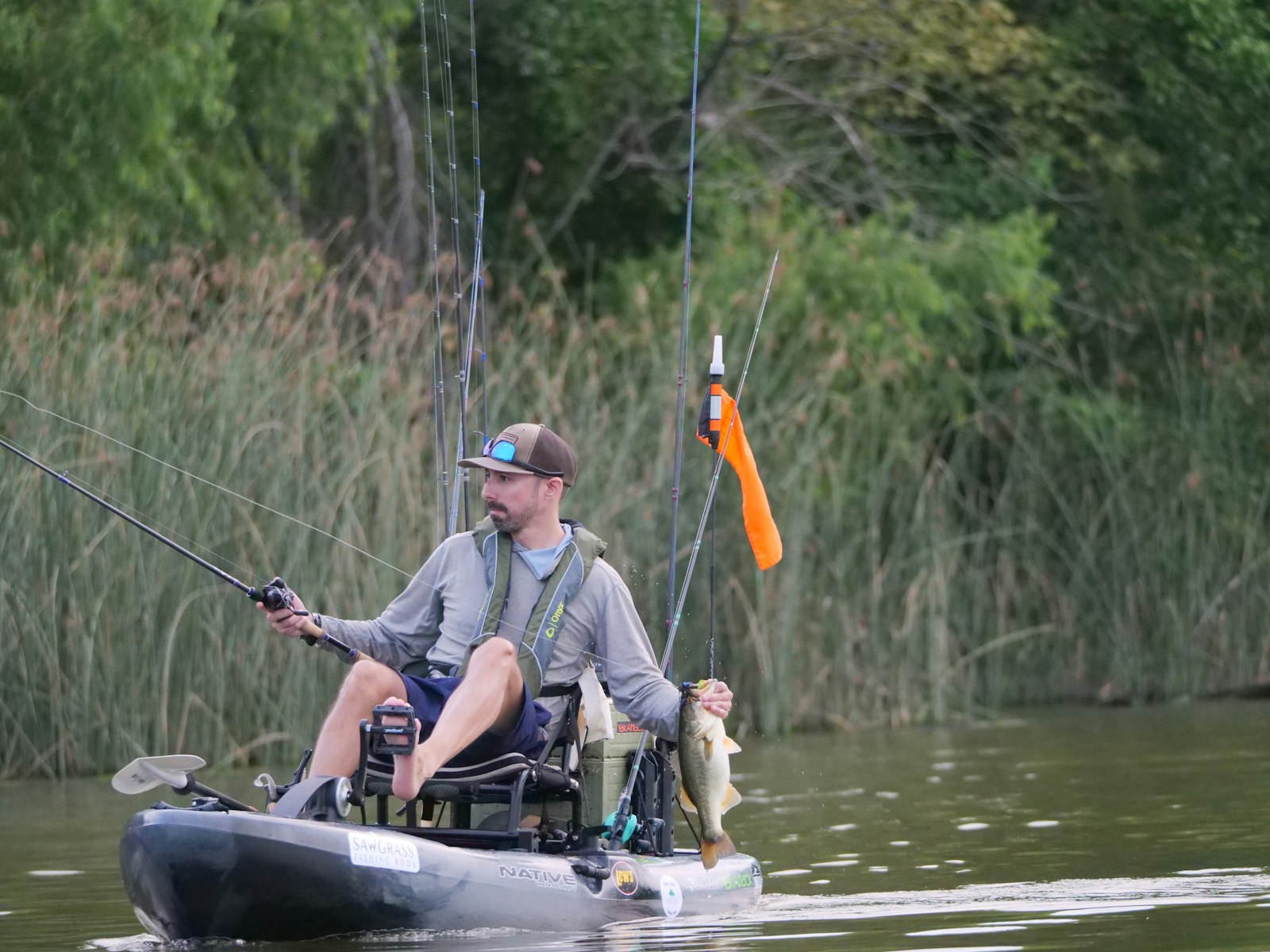
Choose visible, reachable cover and a casting lane you understand. Avoid repeatedly sending a lure into unseen obstructions while standing where retrieving a snag would put you at risk.
Try contrast and vibration as experiments
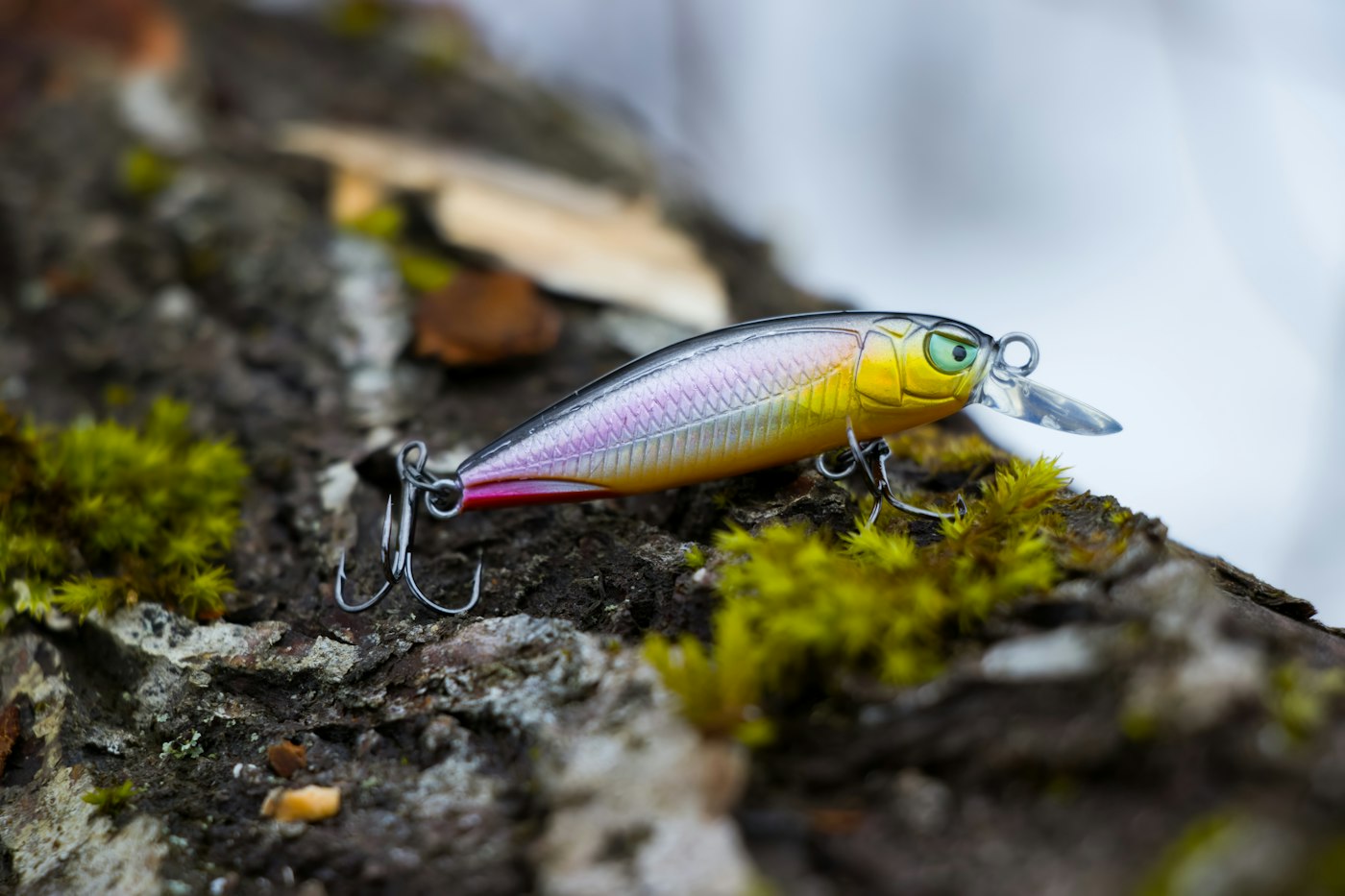
A strong silhouette or brighter contrasting colour can be a useful starting comparison. A spinnerbait can add vibration and flash. These are presentation choices, not guarantees that a particular colour will work in every type of stained water.
Pick two meaningfully different options rather than ten nearly identical shades. Repeat the same route and running depth with each. If both spend their time above the cover or fouled with debris, the colour comparison tells you very little.
Slow enough to maintain the path
Use a retrieve that lets you keep the lure close to the intended feature. That may mean slowing down, shortening the cast or changing the angle. It does not mean the slowest possible retrieve is always correct.
Check a moving lure beside you before each set of casts. Blades should turn and the bait should track as intended. Remove leaves or vegetation promptly. In low visibility you may feel a fouled lure before you see it.
Give a promising target another angle
If an isolated stump or edge is accessible, approach it with a few controlled casts from different directions. Change position only where the footing allows. A different line of travel may matter more than a small colour change.
After a bite, note whether it came at the outside edge, close to the object or during a pause. Use that information on the next similar target. If the water is too difficult to read safely or the presentation remains unmanageable, choosing another access point is a productive adjustment.
Further reading
Technique background: Take Me Fishing: lure colour in muddy water. The practice routines above are suggestions to adapt to your own water.
Educational guidance, researched with AI assistance. No hands-on testing is claimed. Our editorial approach.
A detail needs correcting?Send the model name, source or correction to [email protected]. Read our editorial standards.