The links in this guide are unpaid references. We do not currently earn a commission from them. How we fund the site.
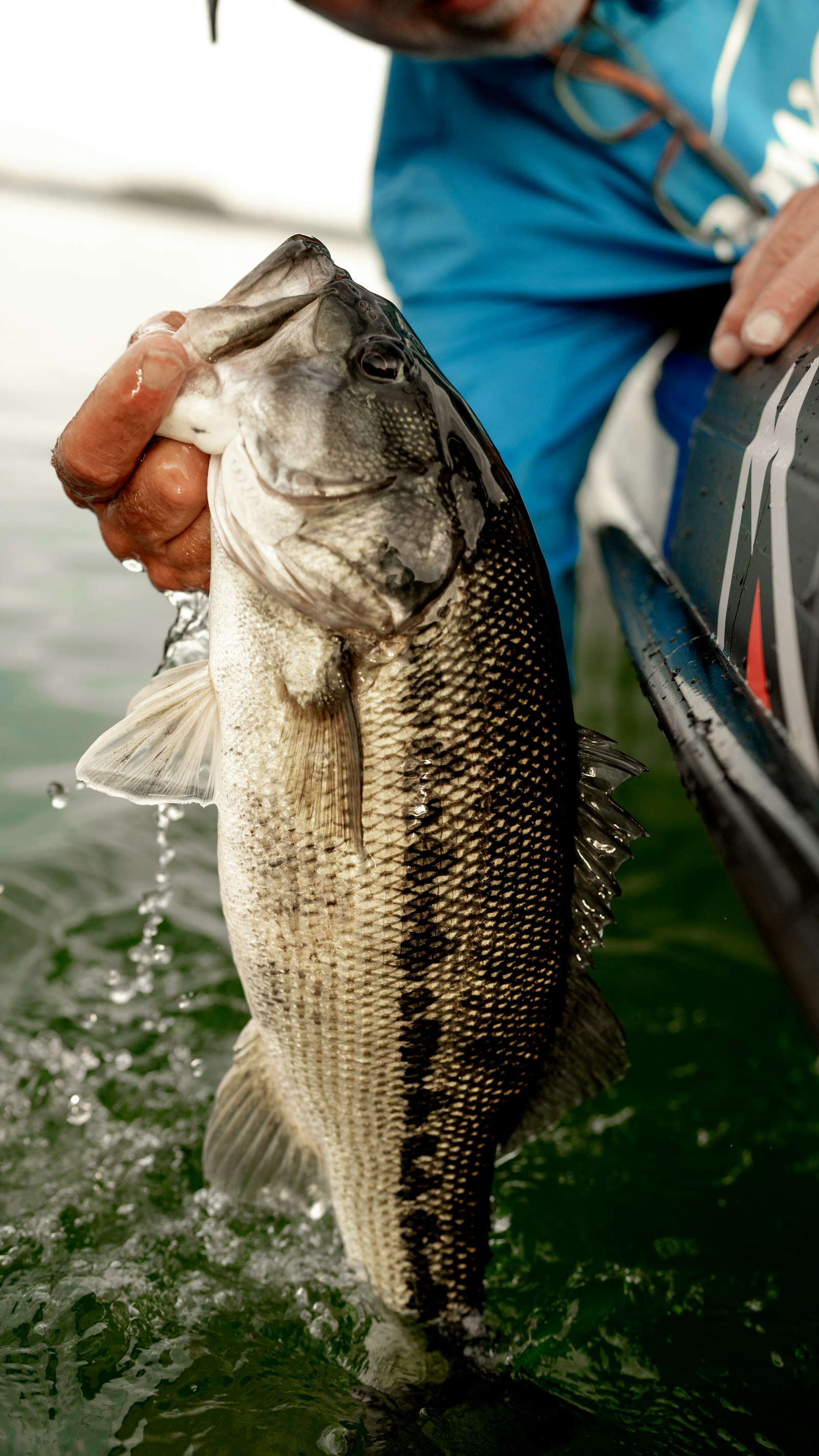
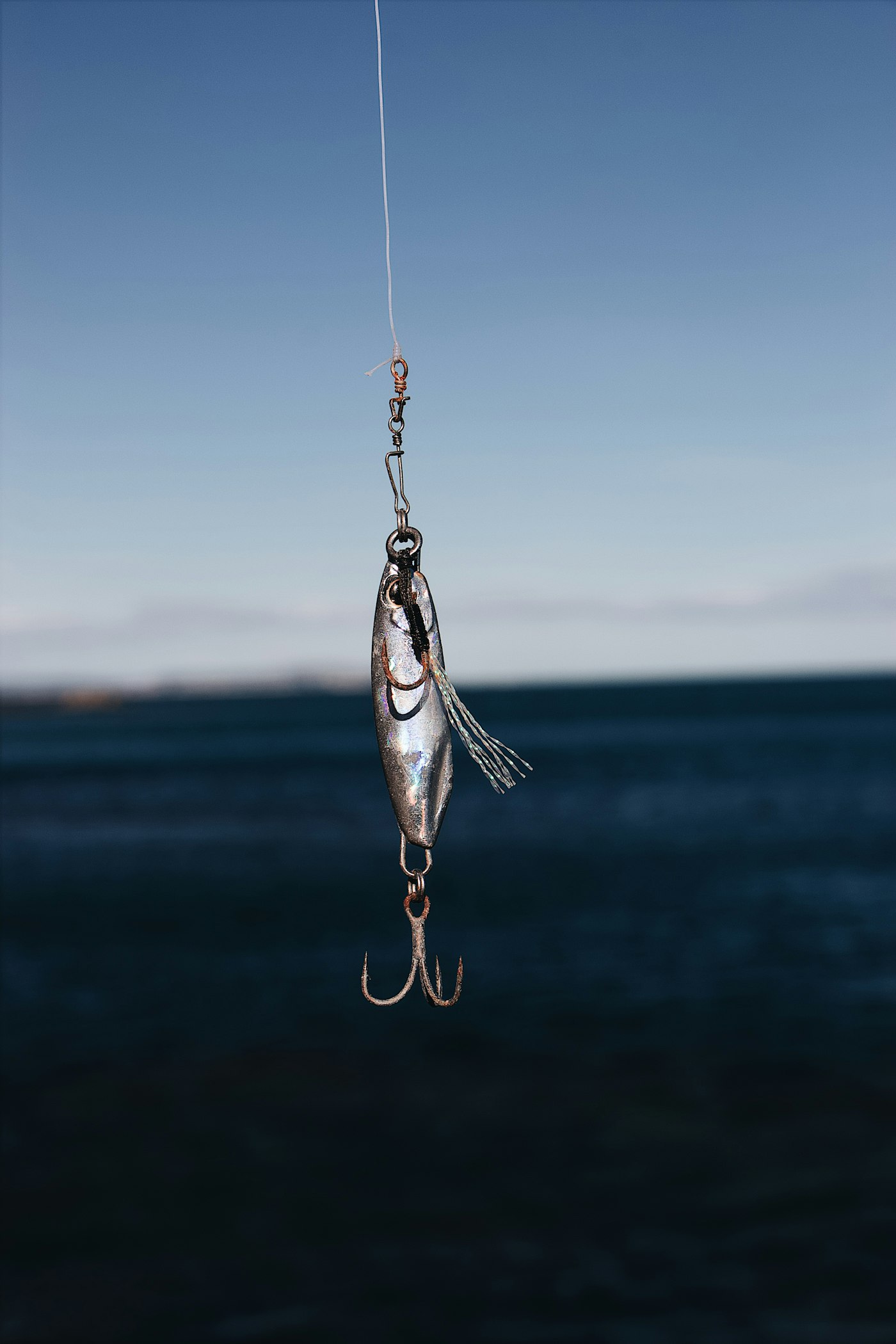
A bass jig is a weighted hook, often dressed with a skirt and soft-plastic trailer. Choose its shape for the route it needs to travel: a jig that works across open rock may handle grass very differently.
Start with the route through cover
Look at where the jig will land, where it will settle and how you will retrieve it. A broad football-style head is commonly used over rock and open bottom; more streamlined designs are intended to pass through other cover. Names alone are not enough—check the manufacturer’s intended use.
Pick a weight that you can control with your rod and line. Include the trailer when checking the total lure weight. More weight can improve contact but may also drive the jig deeper into soft bottom or tighter gaps.
Rig the trailer straight
Lay the trailer beside the hook first to estimate where the point should exit. Thread it onto the keeper without bunching the plastic. Make sure it leaves room for the hook to work. A large trailer changes the fall and can make a compact jig much bulkier.
Test the finished lure beside the bank. Compare a lift, a pause and a short swim. If it rolls, fouls or loses the trailer immediately, fix the rig before making long casts.
Use a small movement first
After the jig reaches the target, recover enough line to follow it. Try a short lift or slow drag followed by a pause. Large hops can pull it out of a small strike zone and increase the distance you need to manage on the next fall.
Alternatively, swim a jig designed for that job above or alongside cover. Keep it on a controlled path. The point is to choose a deliberate retrieve, not to assume every jig must be bounced along bottom.
Change the angle before buying more jigs
If you snag on every cast, move the entry or exit angle. Fish along an edge instead of across it, use a shorter cast, or select a different head or presentation. A weedguard reduces some fouling; it does not make a jig immune to wood or vegetation.
Check the hook, knot and nearby line after contact with rough cover. Record which paths stayed clean. That small map of accessible water makes the next trip more useful than simply collecting additional skirt colours.
Educational guidance, researched with AI assistance. No hands-on testing is claimed. Our editorial approach.
A detail needs correcting?Send the model name, source or correction to [email protected]. Read our editorial standards.