The links in this guide are unpaid references. We do not currently earn a commission from them. How we fund the site.
Fall changes do not reach every lake on the same date. Use cooling trends, available daylight and what you observe at the water to build a starting plan, then revise it when the lake gives you better information.
Start with reachable transitions
Look for connections between feeding areas and nearby depth: the mouth of a cove, an accessible point, a creek entrance or the outside edge of a flat. These are search locations, not guarantees that bass will occupy them.
On a small pond, translate the same idea into a modest scale. A steeper bank beside a shallow corner may be more relevant than a creek-channel pattern borrowed from a large reservoir. Fish the features your water actually contains.
Look for bait without chasing every ripple
Watch for repeated bait activity and predator movement, but distinguish a useful pattern from one isolated splash. Note where activity happens relative to cover and depth. If you can identify the approximate size of the forage, use that to narrow lure size rather than assuming fall always requires a large bait.
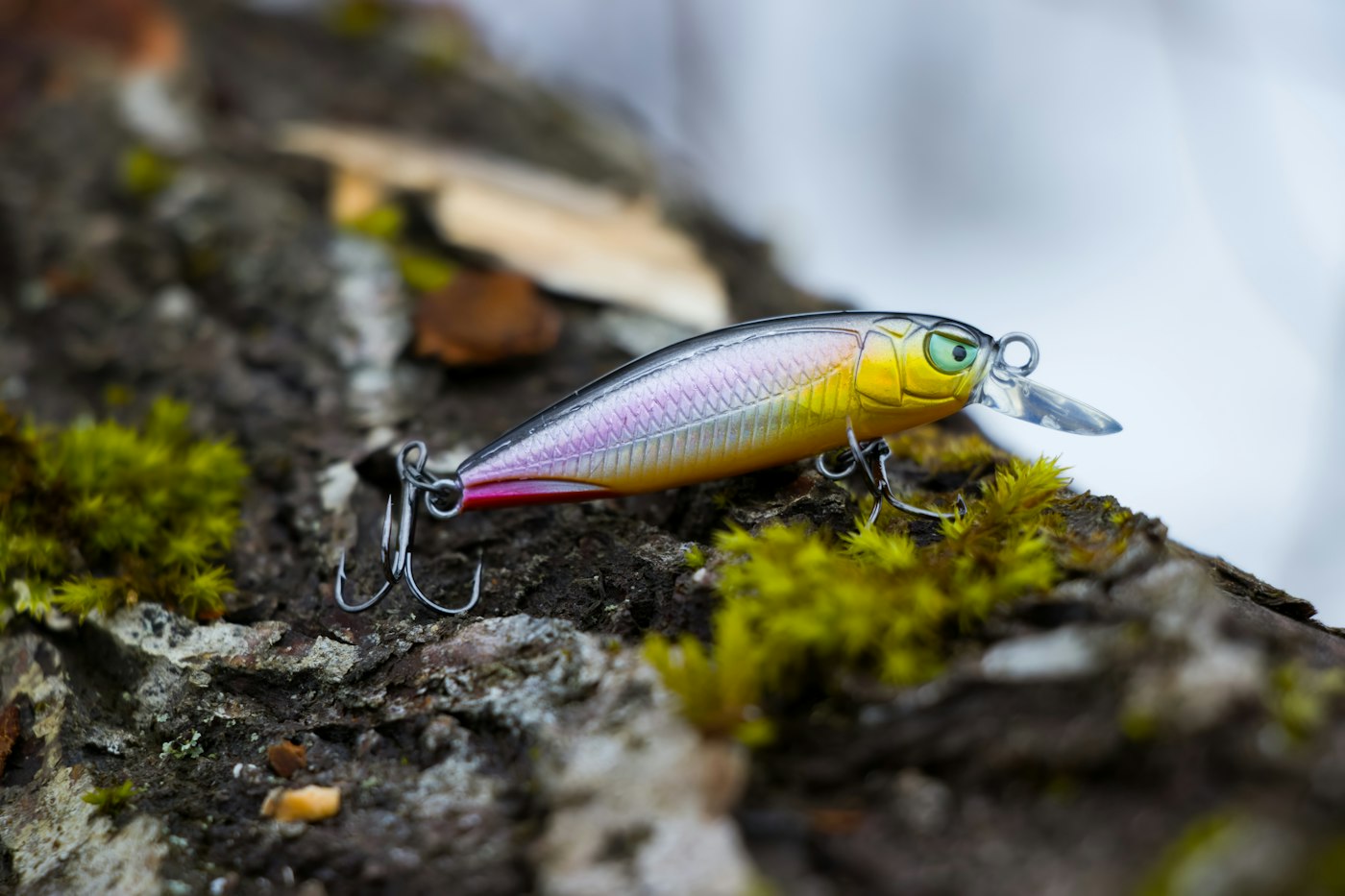
Begin with a moving presentation that your outfit can control. A crankbait or spinnerbait can investigate a stretch, while a slower follow-up can work a specific target.
Use a repeatable first pass
Choose three different reachable features and give each a deliberate pass. Keep one lure and retrieve consistent long enough to compare the locations. Record follows, bites and clean casting routes. An area with bait or a repeatable interaction deserves more attention than an empty-looking stretch you chose only for convenience.
If the first plan fails, change a meaningful variable: deeper access, a different type of cover or another running depth. Replacing one lure colour with a nearly identical one is a smaller adjustment.
Shorten the plan as daylight changes
Leave time to pack up and return before your access becomes difficult. Check the forecast near departure and choose an alternative if wind makes the original bank or launch unsuitable.
Keep a simple note of the conditions and your route. Over several visits, your own lake may show a pattern that does not match a generic early-, middle- or late-fall calendar. Use the seasonal idea as a starting hypothesis, and let repeated observations decide whether it remains useful.
Further reading
Technique background: Take Me Fishing: regional variation in fall patterns. The practice routines above are suggestions to adapt to your own water.
Educational guidance, researched with AI assistance. No hands-on testing is claimed. Our editorial approach.
A detail needs correcting?Send the model name, source or correction to [email protected]. Read our editorial standards.