The links in this guide are unpaid references. We do not currently earn a commission from them. How we fund the site.
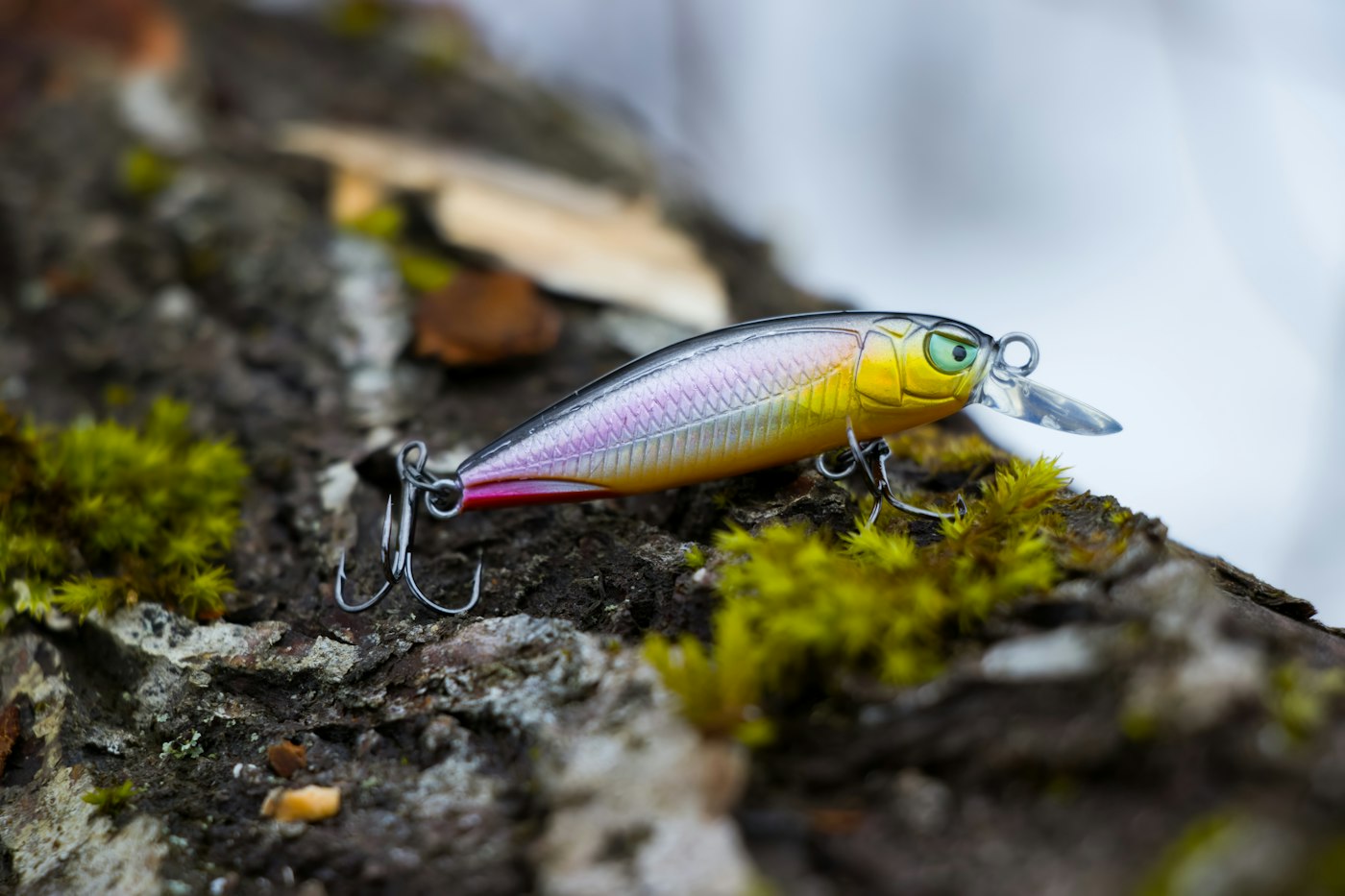
A crankbait’s advertised diving depth is a starting reference, not a promise for every cast. Cast length, line, retrieve and the model itself change where the lure travels.
Choose a running zone
Begin with the feature you can actually reach: the top of submerged vegetation, a shallow rocky edge or an open contour. Choose a lure intended to work in that zone. A very deep diver in a shallow snaggy pocket may spend more time stuck than fishing.
Read the specification for the exact model and size. A similar-looking body from the same product family may have a different bill and diving range. Compare the recommended running depth before choosing a colour.
Give the lure room to work
A crankbait usually needs part of the retrieve to reach its useful depth and then rises toward you near the end. Cast beyond the target when that is safe and accessible. A parallel angle can keep it near an edge longer than repeatedly crossing the edge at a right angle.
From shore, the return path may become shallower as the lure approaches. Pay attention to that final section. If it constantly digs in near your feet, finish the retrieve differently or choose a shallower-running option.
Make contact deliberately
Occasional contact with suitable cover can change a lure’s path, but forcing treble hooks through every branch is not a useful plan. Start around visible, relatively clean bottom while learning how the bait feels. If a floating model contacts an obstruction, a pause may let it rise; a sinking model will behave differently.
Stop and inspect after the lure starts feeling wrong. A leaf on a hook or damaged bill can alter the entire retrieve. Avoid casting a lure with cracked hardware or a bent hook.
Change depth before making a long colour list
If the retrieve passes well above or below the feature, a different colour will not correct that. Try an appropriate diving range or casting angle first. Then compare cadence and pauses.
Write down the model, line type and the feature you contacted. You are building a reference for your own equipment. Combine it with the water-reading routine so each cast has a target and a reason, rather than simply covering the largest possible distance.
Further reading
Technique background: Rapala: matching crankbaits to a running depth. The practice routines above are suggestions to adapt to your own water.
Educational guidance, researched with AI assistance. No hands-on testing is claimed. Our editorial approach.
A detail needs correcting?Send the model name, source or correction to [email protected]. Read our editorial standards.