The links in this guide are unpaid references. We do not currently earn a commission from them. How we fund the site.
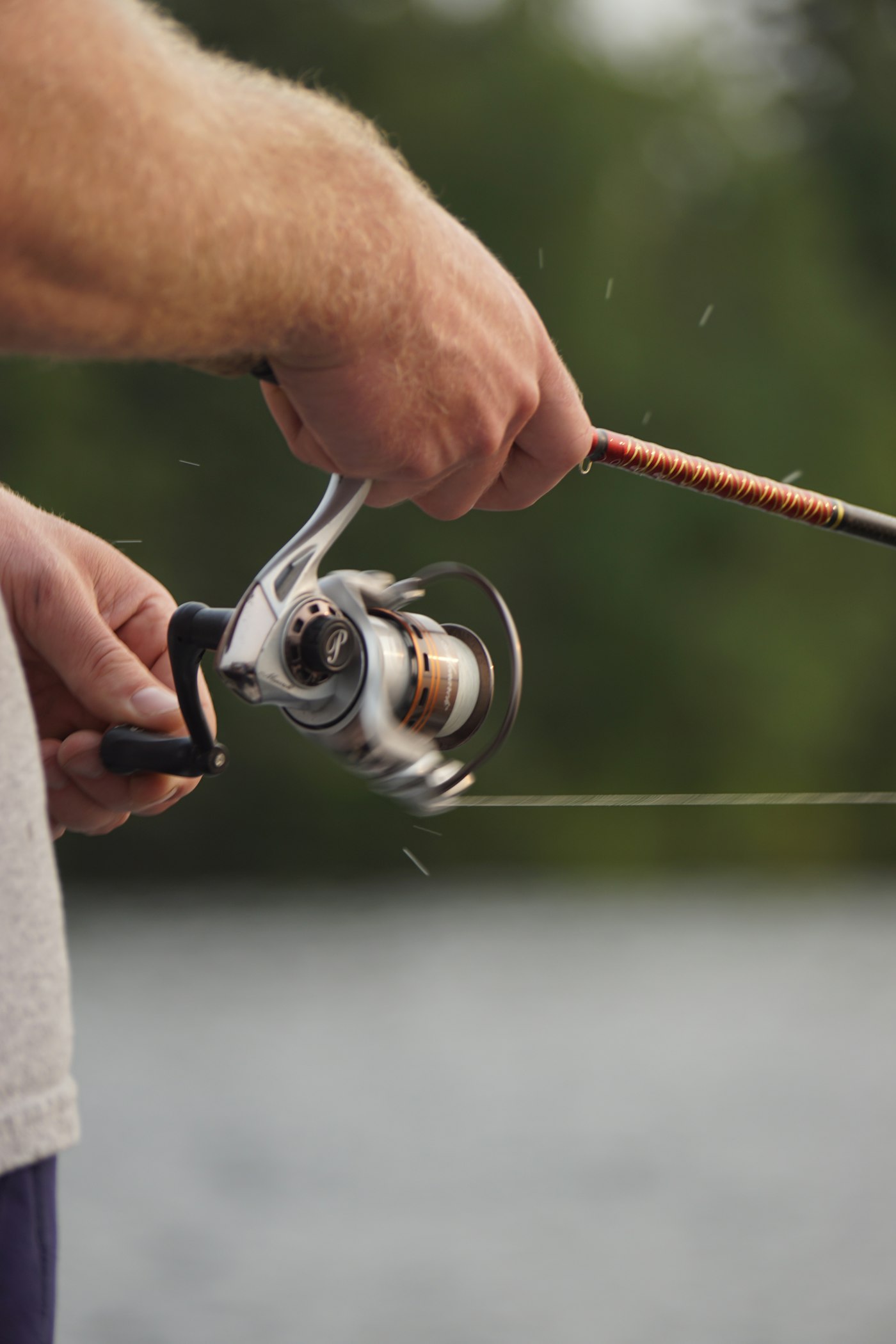
Routine reel care starts with keeping dirt out and noticing problems early. Use the manufacturer’s instructions for the exact reel; cleaning and lubrication requirements are not identical across designs.
Inspect before the reel goes away
Look for grit around the handle, spool and line roller or levelwind. Check for loose external parts and note any new grinding, stiffness or unusual noise. Inspect the line near the lure and the rod guides too, since a damaged guide can create a problem that seems like reel trouble.
Make a short note when something changes. A service technician can use a specific description such as “rough only under load” more effectively than “doesn’t feel right.” Do not force a mechanism that suddenly binds.
Clean according to the maker’s directions
Use the recommended cleaning method and products. Avoid high-pressure water or immersion unless the manual explicitly permits it. A general-purpose spray is not automatically suitable for bearings, drag washers or plastics.
Wipe accessible dirt carefully rather than driving it farther into the reel. If the reel has been submerged or exposed to conditions outside normal use, follow the manufacturer’s service advice instead of assuming an external wipe has addressed the internal contamination.
Do not guess where oil belongs
More lubricant is not always better. Oil and grease serve different jobs, and brake or drag components may require particular treatment. Use the specified product, amount and location. If you cannot identify a component confidently, stop before dismantling it.
Keep model diagrams and warranty information with your maintenance notes. A basic after-trip routine should not turn into an unplanned internal rebuild on the kitchen table.
Dry, store and check before the next trip
Let the equipment dry in a suitable ventilated place before closing it in a bag. Protect it from grit, impacts and unnecessary heat. Follow storage instructions for drag and spool settings rather than applying a universal rule to every reel.
Before fishing again, check that the handle, bail or clutch and drag behave normally. Make a short practice cast where safe. If the same fault remains, arrange appropriate service. Replacing line or buying a new lure will not resolve a mechanical problem that needs attention.
Further reading
Technique background: Shimano: baitcasting reel maintenance guidance. The practice routines above are suggestions to adapt to your own water.
Educational guidance, researched with AI assistance. No hands-on testing is claimed. Our editorial approach.
A detail needs correcting?Send the model name, source or correction to [email protected]. Read our editorial standards.